

I’ve wanted to get into vacuum clamping for decades. At one point, I drew up a workbench with top and apron assembly that was equipped with vacuum clamping and rotated between the legs. However, between the cost and complexity of setting up a vacuum clamping system, I never did it.
Recently, I created this dead-simple vacuum clamping setup that relies on just a piece of MDF with a rubber seal and is powered by a dust extractor. Suction Controller provides a convenient way to adjust the suction force of the clamp, with extra suction being dumped out the other port.
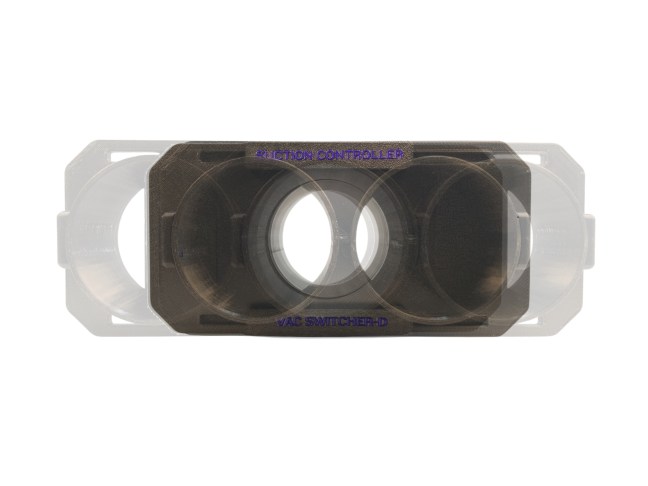
Best of all, because it uses a dust extractor for a suction source, a complete seal is not required for effective clamping. And, unlike vacuum pumps, a dust extractor isn’t the least bothered if some dust gets sucked into the system.
Discover more from Products From The Mind of Chris Wong
Subscribe to get the latest posts sent to your email.

Hi Chris, I see you have developed a vac hold down system, I did notice the Festool extractor increase power when you placed the workpice over the vacuum plate, have you thought about the long term durability of this on your machine? those dust extractors are designed to have intermitent heavy loads on them such as when used with a power tool, a good proportion of the time when using power tools the whole sanding plate is not full face covered so there is a certain volume of air bleed past which does not load the extractor motor fully, I’m unsure whether the CTL extractor you have would fair very well in the situation as a vacuum hold down, the critical elements with any air systems are the balancing of the air throughput and the loading of the motor, all must be calculated along with the motor power and loading. Just an observation I had on this.
Hi Steve,
Thanks for the question. You’ve articulately it very well. Others have also brought this up, and while I understand the point, I’m not sure it applies. There is definitely a discussion to be had, and I am not an expert on the subject. Nonetheless, here are my counterarguments, for consideration:
I plan to do a timed test with the vacuum clamp drawing continuously. I have had this Festool CT 26 dust extractor shut down twice years about 6 years ago when I was running it continuously with a CNC router. I suspect it shut down because of overheating, as I had it wedged in between two cabinets which restricted airflow around the side vents.
Chris
Yes, I think you would need to do some tests to try out the feasibility, on the point of your CT26, I also have one, a CTL26, UK spec, I seem to recall these extractors have a thermal cutout so the motor stops when too hot to avoid burnout, there could be a situation with your extractor being used as a vacuum clamp in that the motor life span could be reduced due to the extra load placed on it, it is not an easy thing to assess, the development of these extractors are rigorously tested over many hours and under various stressed/loaded situations, I wish you success in your endeavour going forward.